Guidance for Monitoring Menstrual Health and Hygiene
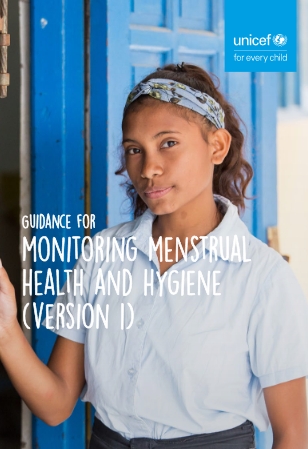 |
Guidance for Monitoring Menstrual Health and Hygiene
guide Jun 2020 ; 130 pages

Ed. UNICEF - New York
Downloadable from the publisher
Editor Presentation
Abstract:
There has been significant increased attention to menstrual health and hygiene (MHH) in the WASH sector over the past decade, but it has not been accompanied by robust or consistent monitoring. While there is not yet sufficient evidence to recommend a comprehensive set of validated indicators and questions to support MHH monitoring, there are simple steps that can be taken now by governments and programme managers to strengthen monitoring efforts. The purpose of this guide is to support the development and/or improvement of MHH monitoring, by highlighting basic principles (including ethical considerations) and example questions to monitor the various elements of MHH. The questions and the wider guidance are not intended to be comprehen-sive or prescriptive; rather, they represent practical suggestions for monitoring MHH, based on sector experiences and the best available information at the time of publication Contents:
Introduction
1.1 What is menstrual health and hygiene?
1.2 Overview of this monitoring guidance
Principles of monitoring MHH
2.1 Ethical considerations
2.2 The steps of monitoring
2.2.1 Selecting and defining associated indicators
2.2.2 Developing means of verification
2.2.3 Pre-testing data collection tools
2.2.4 Collecting data
2.2.5 Analysing and using results
2.3 Equity and inclusion
Monitoring MHH outside the home through national information systems
3.1 Overview of monitoring outside the home
3.2 Example questions for monitoring outside the home
Monitoring MHH in households through national surveys
4.1 Overview of household monitoring
4.2 Example questions for national household surveys
4.2.1 Woman’s questionnaire
4.2.2 Man’s questionnaire
MHH programme monitoring
5.1 Overview of programme monitoring
5.2 Example questions for programme monitoring
5.2.1 Background information
5.2.2 Social support
5.2.3 Knowledge and skills
5.2.4 Facilities and services
5.2.5 Materials
5.2.6 Cross-cutting outcomes
MHH sector knowledge gaps and areas requiring further research
Keywords: |
gender (CI) (DT) (ET) (ope) , menstrual hygiene (CI) (DT) (ET) (ope) |
Publisher/Broadcaster: |
|
UNICEF - New York - Usa |
If there is a broken link, we will be pleased to receive a message: communication@pseau.org